
Washington is now putting real money and policy muscle behind rare-earth projects domestically and also in Brazil and Canada, turning rhetoric into projects.4
In Brazil, the U.S. International Development Finance Corporation (DFC) has begun financing upstream capacity, including a $30 million investment to expand critical-minerals production and through the U.S.-led Minerals Security Partnership, has formally backed rare-earth development such as the Serra Verde project; more recently, DFC committed up to $5 million to Aclara’s Carina heavy rare-earths project in Goiás, explicitly framed as a move to counter China’s dominance.4
North of the border, Washington and Ottawa are co-investing under their renewed Canada–U.S. Energy Transformation Task Force and Joint Action Plan on Critical Minerals, with fresh U.S. funding and even direct equity stakes flowing into Canadian-linked critical-minerals ventures, high-profile examples include the U.S. government’s recent stake in a Canadian rare earth explorer as part of a broader push to secure North American mine-to-magnet capacity.5
One company on our watchlist with rare earth projects in both Brazil and Canada is Canamera Energy Metals (CSE: EMET | OTC: EMETF | Frankfurt: 4LF0), an active rare-earth exploration mining company.
The message to investors is clear: U.S. agencies are de-risking rare-earth projects in friendly jurisdictions like Brazil and Canada to build allied supply so the West isn’t bound to a China-centric chain for the magnet metals that power EVs, AI chips, electronics, and defense.
AI-driven robots don’t move without rare earths. High-torque servo motors in humanoids and factory robots are built around neodymium-iron-boron (NdFeB) permanent magnets (all rare earth elements) often fortified with dysprosium for heat stability because they deliver the compact power density modern AI control loops demand.6
Tesla’s Optimus program and its “cybercab” robotaxi vision lean on that same electromechanical stack: scores of small, precise actuators per robot and per vehicle platform, each a likely consumer of rare-earth magnets as fleets scale.7
That’s why geopolitics matters. The U.S. Department of Defense explicitly calls rare earth magnets essential across advanced systems and is funding “mine-to-magnet” projects in friendly jurisdictions to reduce exposure to hostile foreign choke points.8
The U.S. Government Accountability Office (US GAO) likewise warns that rare earths underpin guidance, radar, aircraft actuators, and more capabilities central to deterrence and to the emerging role of autonomous and robotic systems in warfare.9
Meanwhile, China, dominant in processing and magnets has expanded export controls and licensing on rare earths and magnet products in 2025, with explicit scrutiny of defense-related uses, tightening supply for Western industry.10
For the West, securing new supply is now a strategic technology policy.
This is where Canamera fits: Canamera Energy Metals (OTC: EMETF) with the stated aim of exploring for the magnet chain that AI robots, cybercabs, and defense platforms will consume in volume.
The through-line is simple and bullish for the sector: as AI pushes robots from demos to deployment in factories, on roads, and on the battlefield, rare earths become the quiet gating factor for scale in both commercial autonomy and national defense.
Investors have reasons to watch Canamera Energy Metals (OTC: EMETF) closely: it’s targeting the sweet spot of today’s rare-earths story, ionic-clay prospects in Brazil (known for shallow, lower-capex extraction and ambient-temperature leach) plus a prospective Ontario rare earth project in a Tier-1 jurisdiction.
In particular, Brazil holds a commanding position in the global rare earth elements (REE) sector, boasting the world's second-largest reserves at approximately 21 million metric tons, nearly a quarter of the planet's total, trailing only China's estimated 44 million metric tons.
This untapped potential positions Brazil as a strategic counterweight to China's export restrictions, which have spurred international diversification efforts, including U.S.-Brazil talks in late 2025 aimed at forging partnerships to secure REE supplies for electric vehicles, wind turbines, and defense technologies.
Brazil's REE landscape is surging with momentum: the sector anticipates a 49% investment hike by 2029, part of a broader $68.4 billion mineral push, including $18.45 billion earmarked specifically for rare earths, fueled by major projects in Minas Gerais, such as the Colina REE deposit with high-grade neodymium and praseodymium resources.
Recent infusions, like the $78 million Gina Rinehart backed funding for Brazilian Rare Earths Ltd., alongside a new national mining council prioritizing REE revival, echoes Brazil's historical peak output of 2,200 tonnes in the 1980s, signal a transformative era, potentially elevating the country to a top-three producer by 2030 and anchoring it as a green economy powerhouse amid escalating global demand projected to quadruple by 2040.
In short, Canamera Energy Metals is an exciting rare earth explorer in the right places, with a robust plan for near-term field work.
Disclaimer: Canamera is an exploration-stage rare earth company; results from Brazil are sector-wide and not those of Canamera at this time.
AI is pushing air transport, shipping, and logistics toward autonomy and both AI chips and rare earths are foundational to that shift.11
On the compute side, edge-AI systems like NVIDIA Jetson and Qualcomm’s RB5/Flight RB5 platforms power perception, planning, and navigation directly on aircraft, drones, and mobile robots, enabling real-time inference without relying on the cloud.12
These modules are already being integrated into drones and defense-grade vision systems, with new “Jetson Thor” hardware aimed specifically at higher-end robotics and physical AI.13
On the motion side, rare earths are the quiet gating factor.
High-torque servos and brushless motors used in aircraft actuators, UAV propellers, cargo-handling robots, and autonomous ground equipment typically rely on neodymium-iron-boron (NdFeB) permanent magnets often with dysprosium for thermal stability because nothing else matches their power density and efficiency.14
U.S. GAO and DoD repeatedly flag rare earth magnets as vital for weapon systems and demanding aerospace applications, from actuators to power generation and radar.15
In maritime logistics, AI is moving from pilots to scale: ports and carriers now deploy AI for route optimization, collision-risk reduction, and digital-twin operations.16
Studies and industry initiatives show material fuel and emissions savings, while major shippers begin rolling out AI-controlled vessels that blend autonomy with human oversight signals of a near-term adoption curve.17
In the military domain, drones are becoming integral and AI is indispensable for autonomy, swarming, target recognition, and electronic-warfare resilience.
Open reporting indicates the People’s Republic of China (PRC) is investing heavily in large drone inventories and swarm concepts, testing across land, sea, and air; Western open-source analyses and USAF-affiliated research detail PRC doctrine and manned-unmanned teaming explorations.18
These systems depend on onboard AI processors and rare-earth-magnet actuators in propulsion and control surfaces.18
For the West, securing rare earths is therefore a strategic technology policy, not just an industrial one.
US GAO underscores that rare earth magnets are critical and that the U.S. is working to rebuild “mine-to-magnet” capacity; defense boards have likewise highlighted supply-chain vulnerabilities.19
Put simply: scale in autonomous aviation, shipping, logistics and modern defense drones rides on reliable supplies of rare earths.
This is where Canamera Energy Metals (OTC: EMETF) fits: as a company exploring for rare earths used in these AI-driven motors and actuators, it’s positioned squarely to focus on the autonomy supply chain.
If AI is the brain of tomorrow’s mobility and warfighting systems, rare earths are the muscle; and explorers like Canamera are working on exploring for the upstream materials that make both possible.
China and Russia are turning rare earths into leverage and that matters for every AI chip the West wants to build.
Russia, under sanctions and short on advanced semiconductors, is pushing to grow its own rare-earth output for missiles, drones, and electronic-warfare gear.19
The result: tighter supplies and more competition for the materials that keep the semiconductor world moving.
Here’s why it’s so critical. Nvidia may design the world’s leading AI processors and TSMC may fabricate them, but the factory “muscle” behind those brains runs on rare earths. Cerium oxide (“ceria”) is the abrasive that polishes each wafer layer flat, skip it and chip yields drop.20
Inside the plasma tools that etch and deposit features just atoms thick, chamber parts are coated with yttrium-based materials so they don’t wear out or shed particles; without them, contamination rises and output falls.21
Even the ultra-precise stages that position wafers and masks rely on motors built with neodymium-iron-boron magnets, enabling nanometer-level accuracy.22
Rare earths touch every step.
That’s why China’s new controls are more than paperwork: they can slow or raise the cost of polishing slurries, yttria coatings, and the magnet components inside critical equipment.
For Nvidia and TSMC, those material choke points can delay chip development.
The security angle is just as stark. Russia’s drive to source chips by any means and to expand domestic rare-earth production adds pressure to an already tight market.
In parallel, the U.S. has locked future Ukrainian rare-earth development towards itself, aiming to keep those resources out of Moscow’s and Beijing’s orbit.
Amid this scramble, the West’s AI roadmap increasingly depends on upstream exploration.
That’s where Canamera Energy Metals (OTC: EMETF) comes in: it’s exploring for the rare earths that feed the magnet and process-materials supply chains, exactly the inputs behind ceria slurries, yttria-coated chambers, and NdFeB-driven precision stages.
As China tightens exports and Russia races to build capacity, new non-Chinese supply becomes a strategic lever to sustain Nvidia’s product cadence and TSMC’s advanced-node and packaging scale-up.
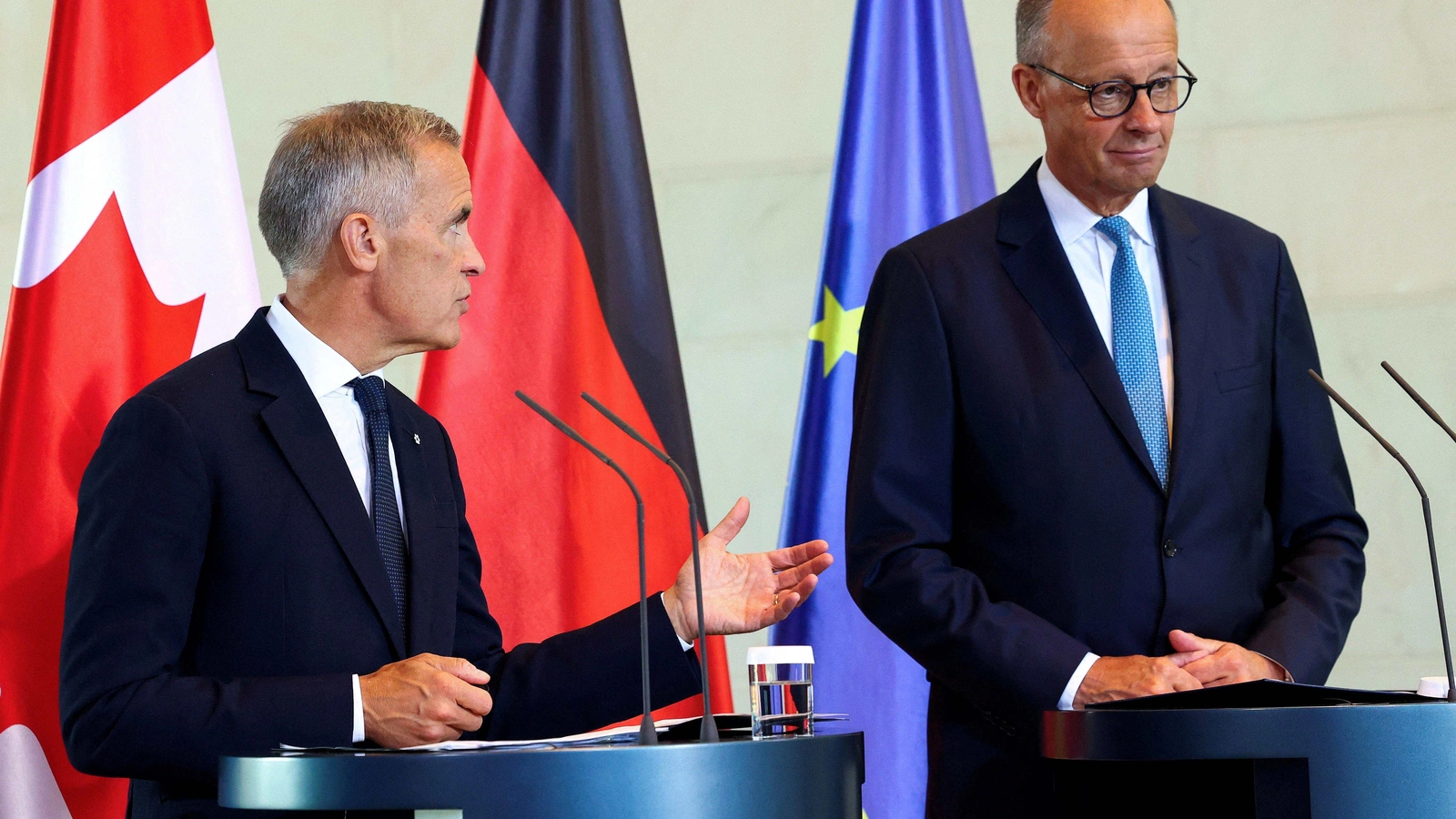
Canada and Germany’s new Joint Declaration of Intent on critical minerals is an economic pact aimed at strengthening processing, refining, and recycling capacity across friendly jurisdictions so that the inputs powering AI chips and data-center infrastructure aren’t hostage to single country chokepoints.23
For Germany, which anchors much of Europe’s semiconductor, precision equipment, and industrial base, the upside is straightforward: closer ties to Canadian resources and policy alignment that can support midstream investment, permitting coordination, export credit, and R&D, exactly the plumbing needed to keep the AI build-out supplied with the magnet metals and specialty materials embedded throughout servers, cooling systems, robotics, and power electronics.
This is where Canamera Energy Metals (OTC: EMETF) is relevant as an exploration company.
Canamera’s work program in Ontario, Canada, a Tier-1, rules-based jurisdiction squarely inside the Canada–EU corridor, offers jurisdictional exposure aligned with Berlin’s strategy, while its Brazilian exploration provides additional geological diversity for a world seeking non-China sources.
In a moment when AI demand is exploding and governments are funding critical-materials resilience, exploration in trusted jurisdictions becomes part of the solution set helping map where tomorrow’s supply chains could be anchored
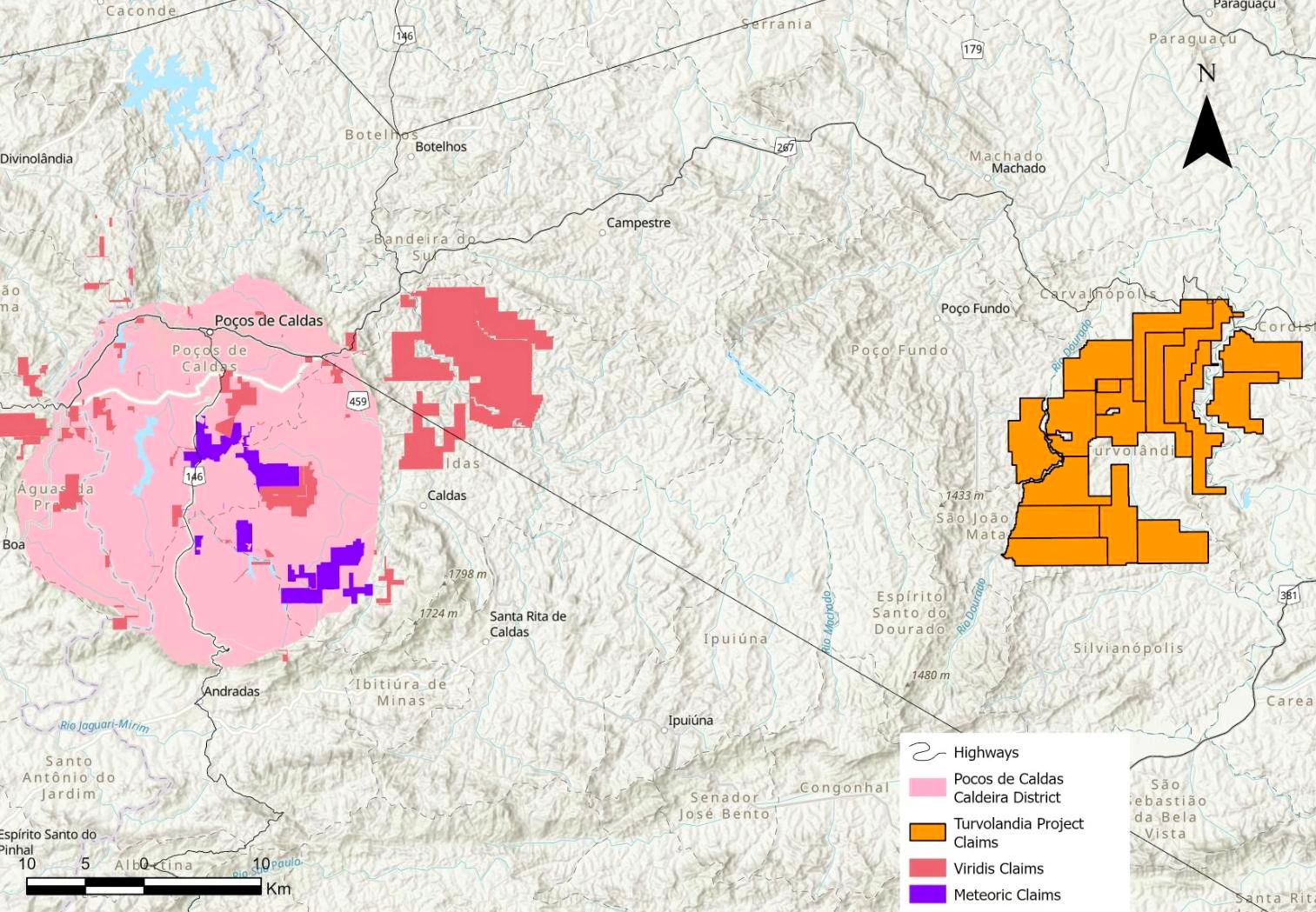
Canamera’s has in place an option agreement to acquire up to a one-hundred percent (100%) interest in two rare earth projects in Brazil: the “Turvolândia Rare Earth Ionic Clay Project” in the state of Minas Gerais and the “São Sepé Rare Earth Ionic Clay Project” located in the state of Rio Grande do Sul. The Turvolândia option covers about 29,574 hectares in Minas Gerais, Brazil, with year-round road access and supportive local infrastructure, and it sits inside a well-known corridor of rare-earth–rich alkaline rocks roughly 55 km west of the Poços de Caldas Complex, a regional anchor for large REE systems.(24)
Early work has focused on shallow drilling and simple “leach” tests to see how easily the minerals can be separated, which is consistent with an ionic-clay style deposit.
Notable early results include 5 m grading 1,852 ppm TREO and 908 ppm MREO, 3 m at 1,111 ppm TREO and 208 ppm MREO, and 2 m at 1,855 ppm TREO and 67 ppm MREO, with additional reports of peak TREO up to about 2,370 ppm and strong leach recoveries on composite samples (TREO = total rare earth oxides; MREO = the key “magnet” rare earths like Nd, Pr, Dy, Tb).
Near-term plans are to expand soil sampling across the property, drill deeper step out holes to test the main horizon where rare earths may concentrate, and continue metallurgical work to understand how readily the minerals release during processing (desorption) and which reagents will be required.
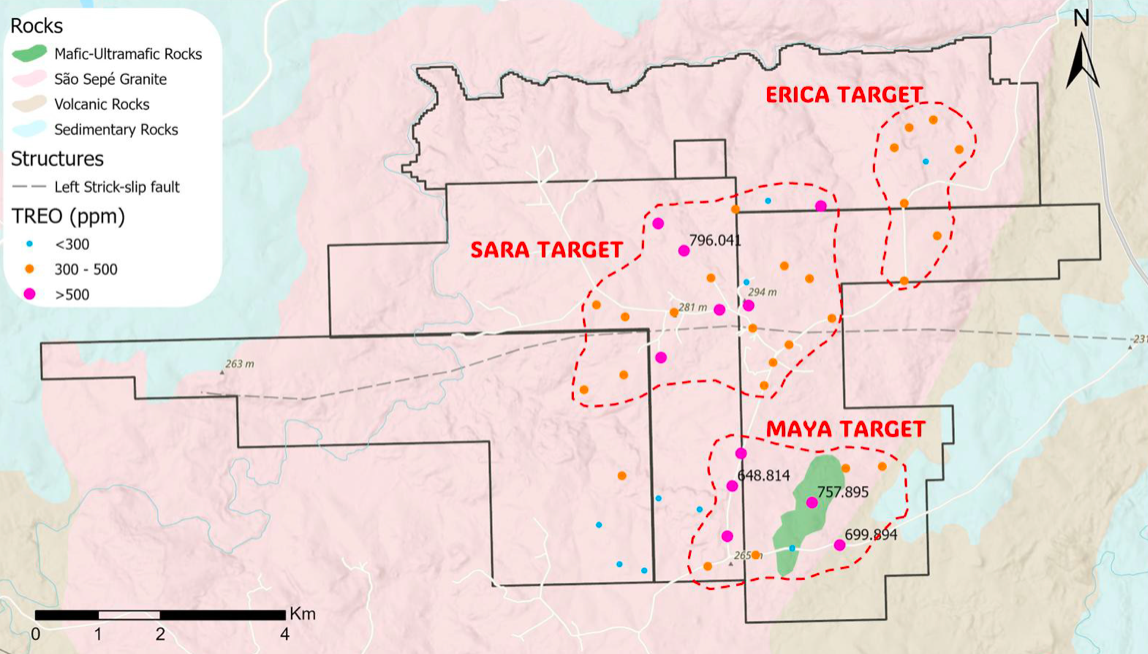
Canamera’s second mineral property option in Brazil provides it with the opportunity to acquire up to 1 100% interest in the ~7,966-hectare “São Sepé Rare Earth Ionic Clay Project”, which is located in the state of Rio Grande do Sul and sits atop an 11-km rapakivi-granite body and widespread advanced-weathered granitoids favorable host rocks for ionic-clay enrichment.
Surface work to date has returned soil samples up to 796 ppm TREO with ~30% MREO in selected samples, defining three initial targets (Erica, Sara, Maya).
The project is undrilled, setting up a clean exploration runway: tighten soil grids, complete geophysics, and execute scout drilling across defined anomalies to test thickness/continuity of any clay-hosted enrichment zone.
The area benefits from year-round access and established mining culture in the state (coal, gems, titanium), easing logistics for staged programs.
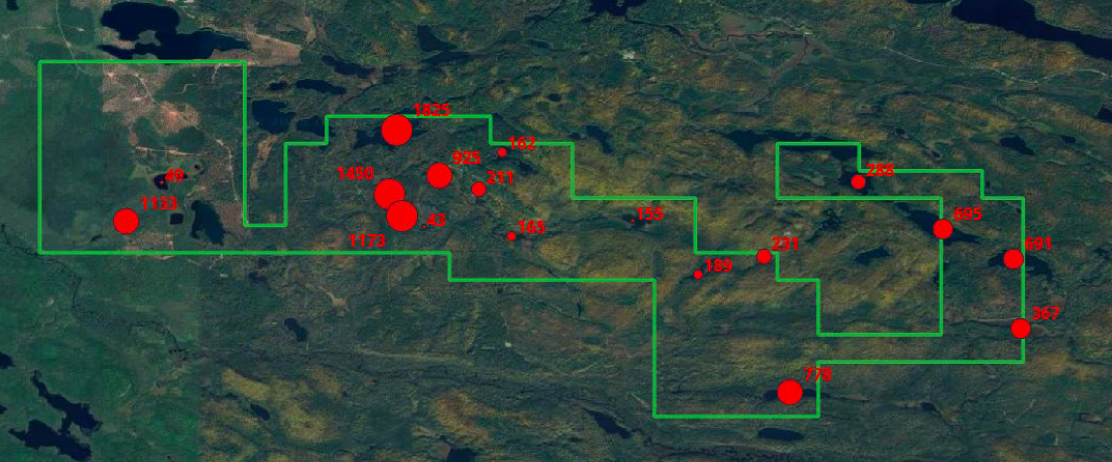
In Ontario’s Clarkson/Garrow township, ~43 km N-NE of North Bay, Canamera (OTC: EMETF) can earn up to a 100% interest in a series of six unpatented mining claims in the Garrow Township area of Northern Ontario, spanning over ~2,182 hectares with road access and skilled local workforce.25
Regional datasets show that, among ~50,000 Ontario samples, only 26 exceeded 500 ppm (99.95th percentile) and three of those cluster within Garrow, elevating its follow-up priority.
The initial program emphasizes property-wide soils plus geophysics to refine drill targets.
The thesis: test whether the high-percentile geochem signal translates into coherent subsurface mineralization in a Tier-1, rules-based jurisdiction that aligns with transatlantic critical-minerals initiatives and growing midstream interest.
A scrappy dealmaker, a precision numbers hawk, a battle-tested explorer, and two market operators who know how to get things listed and funded. That’s the mix at Canamera and it fits an early-stage rare earth explorer operating across Brazil and Ontario.
Brad Brodeur — CEO & Director
Part rainmaker, part operator. With nearly three decades in venture capital markets, Brad has led nine-figure financings and navigated juniors from slide decks to drill rigs. He’s the one who turns “interesting geology” into fully funded programs.
Jelena Veljovic — CFO & Corporate Secretary
Guardian of the books and builder of best-practice controls. Jelena’s public-company finance background means tight reporting, clean audits, and a cadence that keeps regulators, investors, and partners confident as the company scales its programs.
Warren D. Robb, P.Geo. — VP Exploration
Boots-in-the-dirt experience across four continents. Warren brings 35+ years of targeting, drilling, and technical leadership—exactly the discipline you want when testing clay-hosted rare-earth systems and translating geochem into smart meters.
Dean Tyliakos — Director
An equipment-finance pro who’s arranged hundreds of millions in leases and credit lines. Dean thinks in terms of cost, cadence, and “what moves the project forward next,” adding a pragmatic lens to capital allocation.
Michael Mansfield — Director
Venture-market veteran, CPA/CFA, and serial company-builder. Michael’s track record of bringing early-stage stories to public markets—and keeping them onside—adds listing savvy, governance depth, and capital-markets reach.
Capital raised efficiently, programs scoped realistically, results reported cleanly, and fieldwork led by someone who’s seen what “real” looks like. For a company optioning projects in Brazil and Ontario, this team reads like a purpose-built stack: raise, drill, de-risk, repeat.
AI chips, data centers, EVs, and advanced defense all run on magnet metals, and Western policy is finally matching words with money.
That’s the wind at Canamera’s back. The company has three clean shots on goal: ionic-clay targets in Brazil plus a Tier-1 Ontario project, exactly where allied capital and midstream capacity are forming.
The playbook is tight and execution-focused: expand soils, drill smart, prove leachability, and keep exploring for the targets that processors actually want.
Add a board built for venture markets and a field lead who’s done the hard yards, and you’ve got an explorer designed to convert data into catalysts.
For investors, this is asymmetric exposure to one of the most powerful secular themes in materials: de-risking supply chains for the age of AI.
Keep Canamera Energy Metals (CSE: EMET | OTC: EMETF | Frankfurt: 4LF0) on your watchlist.
Yours Truly,
Wall Street Investor Report.
.png)
.png)


.avif)
.png)
Forward-Looking Statements and Legal Disclaimers – Please Read Carefully.
This article contains certain forward-looking statements within the meaning of applicable securities laws. All statements that are not historical facts, including without limitation, statements regarding future estimates, plans, programs, forecasts, projections, objectives, assumptions, expectations or beliefs of future performance, are forward-looking statements. Forward-looking statements in this material include that the market for rare earth minerals will continue to grow substantially; that the market for technologies which utilize rare earth minerals will continue to grow substantially; that the demand for rare earth minerals will continue to grow substantially; that political mandates in Canada, the United States and elsewhere will continue to accelerate the market growth of western-friendly sources for rare earth minerals and related technologies; that Canamera (also referred to herein as the “Company”) can successfully explore and develop its mineral properties; that management’s previous experience will allow the Company to achieve commercial success and implement its business plans. These forward-looking statements are subject to a variety of risks and uncertainties and other factors that could cause actual events or results to differ materially from those projected in the forward-looking information. Risks that could change or prevent these statements from coming to fruition include that markets for rare earth minerals and technologies reliant on same fail to grow as expected due to alternative technologies; that the demand for rare earth minerals does not increase as anticipated due to various reasons; that the rare earth minerals market may not grow as expected due to competing technologies and resources; that political mandates in Canada, the United States and elsewhere may result in market reductions for rare earth minerals and related technologies; that the Company’s property may fail to have positive exploration results and the Company’s business model may be unsuccessful; that the Company may ultimately fail to successfully implement its business plans, raise capital or generate any significant revenues. The forward-looking information contained herein is given as of the date hereof and we assume no responsibility to update or revise such information to reflect new events or circumstances, except as required by law.
PAID ADVERTISEMENT
Compensation & Ownership Disclosure
This communication is a paid advertisement disseminated by Euro Digital Media (EDM) under its brand Wall Street Investor Report via www.wallstinvest.com Euro Digital Media has been compensated US $2,000,000 (plus applicable taxes) by Canamera Energy Metals Corp. (“Canamera”) to produce and distribute this content. Euro Digital Media owns no shares, options, warrants, or other securities or derivatives of Canamera at the time of publication and may purchase or sell such securities in the future without further notice. This disclosure provides clear, prominent notice of consideration received and potential conflicts of interest.
FULL DISCLAIMER AND IMPORTANT DISCLOSURES
Nature of this material — marketing, not advice or research
Who we are; registration status
Issuer, tickers, and scope
Compensation and conflicts (SEC / BCSC / BaFin)
Forward-looking statements (U.S. & Canada)
Key risks (junior mining & small-/micro-cap equities)
Source materials; verification; issuer involvement
Jurisdiction-specific notices
United States (SEC).
Canada (BCSC / CSA members).
Germany / EU (BaFin / MAR / investment-recommendation rules).
No offer; geographic restrictions
Trademarks and third parties
Contact and complaints
1. Robertsailo. (2025, August 14). US DoE announces $1bn funding to secure critical minerals supply chain. Mining Technology. https://www.mining-technology.com/news/us-doe-1bn-funding-critical-minerals-supply-chain/#:~:text=US%20DoE%20announces%20$1bn%20funding%20to%20secure,the%20Critical%20Minerals%20and%20Materials%20Accelerator%20programme
2. Investing News Network. (n.d.). DOD invests US$400 million in rare earth firm MP Materials. Nasdaq. https://www.nasdaq.com/articles/dod-invests-us-400-million-rare-earth-firm-mp-materials#:~:text=The%20US%20Department%20of%20Defense,chain%20and%20reduce%20foreign%20dependency.%22
3. Ier. (2025, July 24). Apple invests in U.S. rare earth supply chain - IER. IER. https://www.instituteforenergyresearch.org/international-issues/apple-invests-in-u-s-rare-earth-supply-chain/#:~:text=Given%20Apple's%20heavy%20reliance%20on,of%20further%20Chinese%20export%20limits.
4. Rare-Earth miner Aclara gets US funding for Brazil project. (2025, September 2). Financialpost. https://financialpost.com/pmn/business-pmn/rare-earth-miner-aclara-gets-us-funding-for-brazil-project#:~:text=Aclara%20has%20a%20$1.5%20billion,Article%20content
5. Canada, N. R. (2024, May 16). Government of Canada and the United States Co-Invest to strengthen critical mineral value chains. Canada.ca. https://www.canada.ca/en/natural-resources-canada/news/2024/05/government-of-canada-and-the-united-states-co-invest-to-strengthen-critical-mineral-value-chains.html
6. Admin. (2025, February 19). Humanoid robots and the future of motors and NdFeB markets. Adamas Intelligence. https://www.adamasintel.com/humanoid-robots-and-the-future-of-motors-and-ndfeb-markets/#:~:text=Critical%20role%20of%20NdFeB%20magnets,to%20capitalize%20on%20this%20trend
7. Elon on Q1 call about permanent magnet supply from China. (2025, April 22). The Humanoid Hub on X. https://x.com/TheHumanoidHub/status/1914827392629268888
8. DOD Bets Big on Rare Earth Elements: Is this the Model for Future Critical Mineral Deals? (2025, July 30). Bipartisan Policy Center. https://bipartisanpolicy.org/blog/dod-bets-big-on-rare-earth-elements/#:~:text=$400%20million%20equity%20investment:%20DOD,the%20magnets%20to%20other%20customers
9. Rare Earth Exchanges. (2025, May 11). Summary of the GAO Report on Critical Materials and Rare Earths--US DOD concerns. Rare Earth Exchanges. https://rareearthexchanges.com/news/critical-materials-supply-chain/#:~:text=Highlights,and%20processing%20of%20these%20materials.
10. Xiaopeng, F. (2025, October 21). China tightens controls on rare earths: legal risk & compliance. Export Controls & Trade & Investment Sanctions - China. https://www.mondaq.com/china/export-controls-trade-investment-sanctions/1694128/china-tightens-controls-on-rare-earths-legal-risk-compliance#:~:text=and%20Telecomms%20industries-,China%20has%20tightened%20export%20controls%20on%20rare%20earths.,experience%20in%20handling%20smuggling%20cases.
11. Baker, F. (2025, September 17). The supply chain of AI. Kinaxis. https://www.kinaxis.com/en/blog/supply-chain-ai#:~:text=Rare%20earth%20elements%2C%20crucial%20to,and%20fostering%20a%20stable%20supply.
12. Zhang, Z., Kang, Y., Lu, Y., & Li, P. (2025, June 24). The Role of Artificial Intelligence in Business Model Innovation of Digital Platform Enterprises. https://www.mdpi.com/2079-8954/13/7/507
13. Maheshwari, S., & Maheshwari, S. (2025, September 4). Introducing NVIDIA Jetson Thor, the ultimate platform for physical AI. NVIDIA Technical Blog. https://developer.nvidia.com/blog/introducing-nvidia-jetson-thor-the-ultimate-platform-for-physical-ai/#:~:text=How%20is%20NVIDIA%20Jetson%20Thor,3.5x%20better%20energy%20efficiency.
14. Magnetics, M. (2025, January 12). Neodymium Magnets in Aerospace: Enhancing performance and safety. MPCO Magnets. https://mpcomagnetics.com/blog/neodymium-magnets-in-aerospace-enhancing-performance-and-safety/#:~:text=The%20aerospace%20environment%20can%20be,for%20more%20fuel%2Defficient%20designs.
15. Rare Earth Exchanges. (2025b, October 6). 6 Military uses of rare earth elements in defense technology. Rare Earth Exchanges. https://rareearthexchanges.com/rare-earth-elements-in-defense-technology/#:~:text=Rare%20earth%20permanent%20magnets%20are,earth%20elements%20in%20defense%20technology?
16. Danelec Newsroom | How Digital Twin Route Optimizers Revolutionize Maritime voyage Planning. (n.d.). https://www.danelec.com/newsroom/how-digital-twin-route-optimizers-transform-voyage-planning-for-real-world-maritime-efficiency#:~:text=A%20digital%20twin%20route%20optimizer,in%20different%20scenarios%20at%20sea.
17. His Majesty the King in Right of Canada as represented by the Minister of National Defence, Eyre, W., & Matthews, B. (2024). The Department of National Defence and Canadian Armed Forces Artificial Intelligence Strategy. In DND/CAF AI Strategy [Report]. https://www.canada.ca/content/dam/dnd-mdn/documents/reports/ai-ia/dndcaf-ai-strategy.pdf
18. Ditter, T. & Eleanor Harvey. (2025). PRC concepts for UAV swarms in future warfare [Report]. CNA Corporation.
19. Energy News. (2025, February 26). What is Russia's goal in rare earth metals? Energy News. https://energynews.oedigital.com/mining/2025/02/26/what-is-russias-goal-in-rare-earth-metals#:~:text=The%20Russian%20documents%20on%20the,RUSSIA'S%20PRODUCTION%20PLAN
20. James, L. (2025, October 9). China expands rare-earth export controls, creating risks for PC component supply — Beijing tightens grip on… Tom’s Hardware. https://www.tomshardware.com/tech-industry/china-expands-rare-earth-export-controls
21. Saint-Gobain Thermal Spray Powders – Protecting Semiconductor Dry-Etch Chambers. (2022, May 31). Top Saint-Gobain Group.
22. Capital, E. (2025, April 23). ASML’s supply chain, bill of materials, and the devastating effects of potential tariffs on US fabs. Entropy Capital. https://entropycapital.substack.com/p/asmls-supply-chain-bill-of-materials
23. Canada, N. R. (2025, August 25). Joint Declaration of Intent between Canada and Germany on Critical Minerals Cooperation. Canada.ca. https://www.canada.ca/en/natural-resources-canada/news/2025/08/joint-declaration-of-intent-between-canada-and-germany-on-critical-minerals-cooperation.html
24. Corp, C. E. M. (n.d.). Canamera executes option agreement to acquire 100% interest in two Brazilian rare earth projects. Newsfile. https://www.newsfilecorp.com/release/269414/Canamera-Executes-Option-Agreement-to-Acquire-100-Interest-in-Two-Brazilian-Rare-Earth-Projects
25. Corp, C. E. M. (n.d.). Canamera options priority rare earth elements targets in Garrow Township, Northern Ontario. Newsfile.
https://www.newsfilecorp.com/company/11828/Canamera-Energy-Metals-Corp.

